建议香港为粤语文化申请世界文化遗产名录,参考粤剧成功申遗
蓝粤网 2026-11-17 4 0

一、背景
粤语,即广府方言,是中华文明重要的口头语言文化载体,通行于广东、广西、香港、澳门等粤港澳大湾区核心区域,广泛流传于全球海外华人社群,使用人口规模庞大。粤剧已于2009年由粤港澳三地联合申报,列入联合国人类非物质文化遗产代表作名录,而粤剧正是以粤语为核心演唱语言;广东音乐、咸水歌、粤语讲古、民间说唱等一大批国家级、省级非遗项目,同样依托粤语得以传承延续。
伴随城市化、普通话普及,当代社会环境下,粤语口头传统的代际传承面临现实挑战:部分青少年口语能力弱化,大量口头故事、俗语歌谣、传统口述技艺存在流失风险。参照国际上口头语言类非遗保护经验,将粤语口头传统文化(包含方言口述、歌谣、讲古、俗语口头传统整体) 推动申报联合国人类非物质文化遗产,不是将方言作为独立语言剥离中华文明体系,而是对这一植根于汉语体系的活态口头文化开展系统性保护,延续岭南文化根脉,丰富世界语言文化多样性。
二、申报的现实意义
第一,筑牢岭南文化身份根基。粤语承载广府地区千年来民间历史、民俗礼仪、生活智慧,大量民间谚语、口述故事、传统歌谣依靠口耳相传。推动申遗,是以国际公约框架保护本土口头传统,强化粤港澳三地文化纽带,增强大湾区民众文化认同感与凝聚力。
第二,传承中华口头文化多样性。联合国《保护非物质文化遗产公约》重视口头传统表达,我国赫哲族伊玛堪等项目,就是以本土语言口头说唱形式列入世界非遗,为方言口头文化保护提供成熟参考案例。粤语口头传统作为汉语重要分支,申遗可向世界展示中华文明内部丰富多元的方言文化样貌。
第三,助力中华文化对外传播。海外数千万粤籍华侨华人世代使用粤语,粤语是连接海内外华人重要文化纽带。列入世界非遗,有利于讲好中国岭南故事,提升粤港澳大湾区文化国际辨识度。
第四,倒逼完善系统性保护机制。申遗不等于单纯拿一个名号,申报全过程会推动粤语语音库、口述文献、民间歌谣进行数字化建档,推动方言进校园、传承人扶持、粤语文艺创作扶持等保护措施落地,建立常态化保护制度。
三、现存主要困难
- 联合国非遗申报规则中,单纯语言本体不能单独申报,必须绑定其承载的口头传统、民俗实践、民间艺术,需要整合粤语讲古、民间歌谣、口述民俗、俗语传统等形成复合型申报单元,不能只提交“粤语语言”本身。
- 申报需要粤港澳三地协同联动,完成资源普查、社区意见征集、完整保护方案编制、建立地方非遗清单等前置工作,学术论证、档案采集工作量大。
- 社会认知存在误区,部分公众误以为申遗代表方言“濒危消亡”,需要做好科普:申遗核心目的是“主动保护、活态传承”,不等同认定该文化已经消亡。
- 我国每两年向联合国提交的代表作申报名额有限,需要先进入国家非遗预备名录,按周期有序推进。
四、具体工作建议
- 组建跨区域专家专班,确定申报单元。由文化部门牵头,联动广东、香港、澳门、广西粤语流行地区语言学、民俗学非遗专家,不以单纯方言语言申报,定位为粤语口头传统(广府口头表达文化),整合粤语讲古、民间歌谣、口头谚语、民间口述故事等活态实践,形成完整申报主体。
- 开展全面普查建档,建设粤语数字资源库。系统采集粤语各地口音音频、口述故事、传统歌谣,建立数字化语音、文本资料库,完成民间传承人登记,把相关项目纳入各地非物质文化遗产清单,满足联合国申报基础条件。
- 粤港澳协同,将项目纳入国家世界非遗预备名录。借鉴粤剧申遗粤港澳三地联合申报成功经验,广泛征集社区、民间团体、传承人意见,编制完整保护规划,先行纳入我国世界文化遗产预备名单,按联合国申报周期择机报送。
- 落地日常保护举措,申遗与保护并行。设立粤语文化保护专项经费;鼓励粤语讲古、歌谣、影视音乐创作;推动粤语文化进校园、公共文化场馆常态化开展方言体验活动;扶持民间粤语文化社团,实现“保护先行,申报跟进”。
- 做好社会科普引导。面向公众宣传联合国非遗规则,厘清认知误区:申遗目的是保护口头文化传统,不改变国家通用语言文字法定地位,坚持国家通用语言推广与地方优秀方言保护并行。
五、结语
推动粤语口头传统文化申遗,不是割裂方言与汉语的内在联系,而是在国家通用语言普及的大背景下,对珍贵活态口头文化加以守护。延续粤剧申遗的成功经验,通过申遗带动系统性保护,既能守护粤港澳共同的文化记忆,也能向世界展现中华文化兼容多元的独特魅力。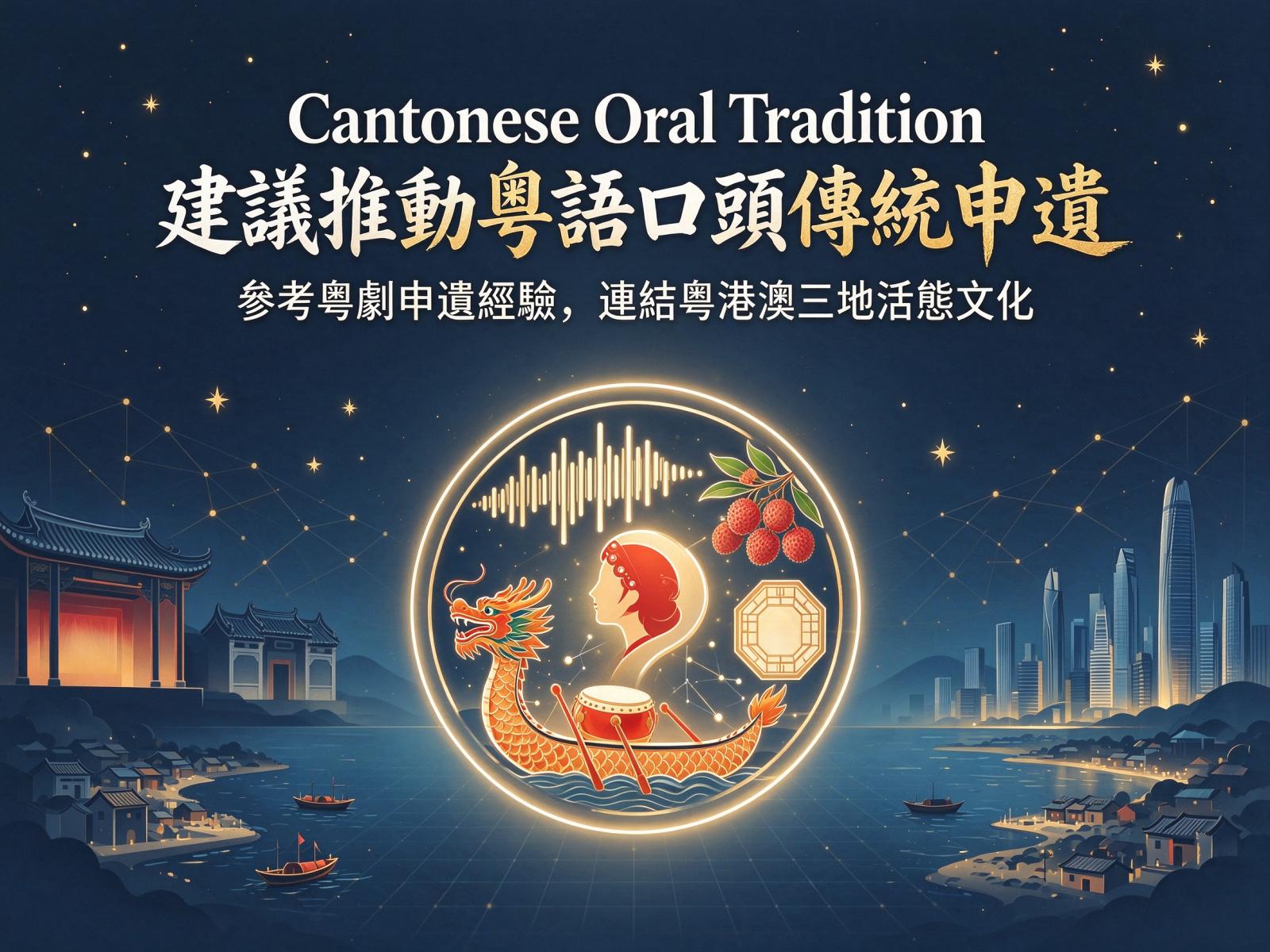
建議推動粵語口頭傳統申報聯合國人類非物質文化遺產代表作名錄(建議稿)
背景
粵語係廣府文化最重要嘅口頭載體,通行於廣東、廣西、香港同澳門,亦流傳喺全球粵籍華人社群。早喺2009年,粵劇已經透過粤港澳三地聯合申報,列入聯合國非物質文化遺產。粵劇嘅唱做念打全部都建基喺粵語之上;粵語講古、咸水歌、廣東民間說唱等本土非遺項目,都靠粵語先可以代代相傳。
隨住城市化同普通話普及,粵語口頭傳正面對傳承嘅挑戰:唔少年輕一代粵語表達能力轉弱,好多民間謠諺、口述故事、傳統技藝有流失嘅風險。參考國際保護口頭文化嘅經驗,推動「粵語口頭傳統」申報世界非物質文化遺產,唔係將粵語同漢語體系割開,而係透過國際公約嘅框架,系統守護呢項活態文化,鞏固嶺南文化嘅根脈,豐富世界語言文化多樣性。
申報嘅意義
第一,鞏固粤港澳共同文化認同。粵語承載住廣府幾百年民間歷史、禮俗同生活智慧。申遺可以強化三地文化紐帶,提升大眾對本土文化嘅歸屬感。
第二,展示中華文化多元面貌。聯合國《保護非物質文化遺產公約》十分重視口頭傳統。國內已有多個少數民族口頭藝術入選世界非遺。粵語口頭傳統作為漢語重要分支,可以向世界呈現中華文化豐富嘅方言內涵。
第三,助力海外華人文化連結。全球幾千萬粵籍僑胞世代使用粵語。列入世界非遺,可以強化海內外華人嘅文化紐帶,提升粤港澳大灣區嘅國際文化形象。
第四,帶動實質保護工作。申遺嘅過程,會推動粵語音頻庫、口述文獻數碼化存檔,扶持傳承人,落實各項本土文化保育措施。
面對嘅主要困難
聯合國規例唔接受淨係申報語言本身,必須連同口頭講古、民間歌謠、俗諺等活態民俗一齊,組成複合申報單元。申報需要粤港澳三地協調合作,做大量學術研究同民間資料搜集。同時要向大眾解釋清楚:申遺唔等於認定粵語已經瀕危,係主動做保育;亦唔會動搖國家通用語文字嘅法定地位。另外國家世界非遺申報有名額限制,需要先納入國家預備名單,按程序推進。
具體建議
一、成立跨地域專家小組,以「粵語口頭傳統」作為申報主體,整合講古、民間歌謠、口述民俗等內容。
二、全面做資料普查,建立粵語數碼資源庫,登記民間傳承人。
三、參考粵劇申遺嘅成功經驗,粤港澳聯合,爭取納入國家世界非物質文化遺產預備名錄。
四、落實日常保育,撥出專項經費,支持粵語文藝創作、公眾推廣活動。
五、做好公眾教育,講明保育方言同推廣國家通用語可以並存。
結語
推動粵語口頭傳統申遺,目的係守護活態嘅嶺南文化。借鑑粵劇申遺嘅經驗,以申報帶動保育,既保存粤港澳共同嘅集體記憶,亦向世界展現中華文化兼容並蓄嘅特質。 (字數:842)
Proposal for Inscribing the Cantonese Oral Tradition on the UNESCO Representative List of the Intangible Cultural Heritage of Humanity
Background
Cantonese constitutes a vital oral carrier of Cantonese‑regional culture. It is widely used across Guangdong, Guangxi, Hong Kong and Macao, and maintained by overseas Cantonese‑descendant communities worldwide. In 2009, Cantonese Opera, a performing art entirely rooted in the Cantonese language, was jointly nominated by Guangdong, Hong Kong and Macao and inscribed onto the UNESCO Intangible Cultural Heritage List. A wide range of national‑level heritage practices, including Cantonese storytelling, salt‑water folk songs and vernacular narratives, depend on Cantonese for inter‑generational transmission.
Amid urbanisation and the nationwide promotion of Standard Chinese, the living Cantonese oral tradition faces tangible preservation challenges. Many younger generations show diminishing practical proficiency in Cantonese, while countless folk proverbs, oral tales and vernacular customs risk gradual disappearance. Drawing on international best‑practice for oral heritage safeguarding, nominating the Cantonese Oral Tradition for UNESCO recognition does not separate Cantonese from the broader Sinitic linguistic family. Instead, it leverages the UNESCO Convention framework for systematic living‑heritage protection, strengthens Lingnan cultural roots and contributes to global linguistic diversity.
Significance of the Nomination
First, it consolidates shared cultural identity across the Guangdong‑Hong Kong‑Macao Greater Bay Area. Embedded within Cantonese are centuries of local history, rituals and folk wisdom. Inscription would reinforce cross‑region cultural bonds and public sense of belonging.
Second, it demonstrates the internal diversity of Chinese civilisation. The UNESCO Convention for the Safeguarding of Intangible Cultural Heritage attaches great importance to oral traditions. Several oral epic traditions of China’s ethnic minorities have already obtained UNESCO listing. As a major branch of Sinitic speech, the Cantonese Oral Tradition can illustrate the rich dialectal diversity of Chinese culture to the world.
Third, it sustains cultural ties with global overseas Chinese. Tens of millions of Cantonese‑origin diaspora communities preserve the language. UNESCO recognition can strengthen cultural links between home and diaspora populations and elevate the international cultural profile of the Greater Bay Area.
Fourth, nomination drives tangible conservation work. The preparatory process will push forward digitisation of Cantonese audio archives and oral‑history documents, support tradition‑bearers and implement concrete safeguarding measures.
Key Challenges
UNESCO rules do not accept pure “language‑only” submissions. The nomination package must be built around a composite heritage unit combining living practices: oral storytelling, folk ballads, vernacular sayings and associated customs. Joint coordination among Guangdong, Hong Kong and Macao is required for academic research and field‑work documentation. Public outreach is essential to clarify that inscription does not label Cantonese as an endangered language; it represents proactive safeguarding, and will not undermine the legal status of Standard Chinese. In addition, national nomination quotas are limited. The project must first be included in China’s Tentative List for UNESCO World Intangible Cultural Heritage and follow formal nomination timelines.
Recommendations
- Set‑up a cross‑regional expert working group, defining the “Cantonese Oral Tradition” as the nomination subject, integrating storytelling, folk ballads and oral folk customs.
- Conduct comprehensive field surveys and build a digital Cantonese heritage archive, documenting folk tradition‑bearers.
- Following the successful model of Cantonese‑Opera nomination, pursue joint Guangdong‑Hong Kong‑Macao coordination to include the project on China’s national Tentative List.
- Deliver on‑the‑ground safeguarding: allocate special funding to support Cantonese artistic creation and public outreach programmes.
- Launch public education campaigns to communicate that safeguarding regional dialects can co‑exist with the promotion of Standard Chinese.
Conclusion
The proposal for the Cantonese Oral Tradition seeks to preserve living Lingnan cultural heritage. Building on the successful Cantonese‑Opera experience, nomination serves as a catalyst for practical safeguarding. It conserves collective memory shared across the Greater Bay Area and showcases the inclusive nature of Chinese civilisation to the international community.
本文来源:蓝粤网,发布时间:2026-11-17,本站乃公益性发布
官方 天下粤商:拓展粤商产业资源,网罗广府商家商业信息 *进入频道
官方 网站建设:企业、政府、学校网站建设、开发、运营,3D网页开发(14739007150,微信同号) *在线咨询
官方 全能网队:让企业内低性价比的网站运营/设计师下岗!网站运营/SEO/SEM/AI优化/品牌拓展/建站 *在线咨询
官方 丰业合作社:广东省级示范社,30多年原产地批发供应荔枝、圣女果、番石榴、火龙果等 #13922255007 *在线咨询 *填写收购意向

如本文侵权,请把本文相对应的原创链接及文章作者证明发至邮箱service@yuetol.com,核实后本站即删除。
网友回应 更多回应(0)